
Qigong and Tai Chi classes in Hastings
About Me
I’m a certified Qigong Teacher through the Shenzhou Association and hold a 2nd Duan in Taijiquan. I’m a student of Master Fumin Wang Guo, 8th Duan of Wushu with the National Wushu Association of China, and President of Shenzhou – National Association of Taiji Culture in Spain.
My path into Qigong and Tai Chi began in 2000, at a point in my life when I needed it most. A demanding job had left me stressed and stretched thin, and injuries from a car accident had left my body in pain. I was looking for a way to get healthier and calmer — what I found instead was a lifelong practice that would shape the next twenty-plus years of my life.
From my first class, I was captivated. What started as small, tentative steps toward recovery grew into a deep and lasting commitment. Over the following two decades, I trained under several accomplished teachers and masters in Germany and Spain, gradually earning my qualifications in both Qigong and Taijiquan.
I now feel privileged to teach Qigong for a living. Having experienced firsthand how much this practice can offer — physically, mentally, and spiritually — I bring genuine warmth and understanding to every class, especially for those coming with their own stress, pain, or uncertainty.
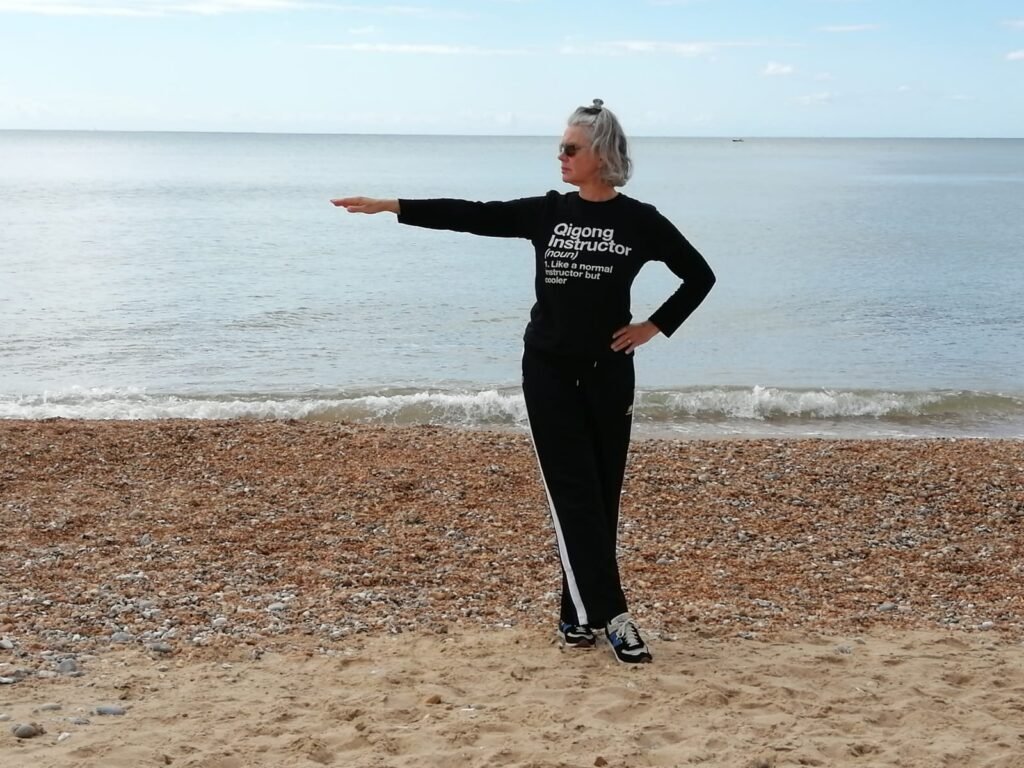
Qigong
An ancient Chinese practice, over 5,000 years old, that combines gentle movement, rhythmic breathing and focus. “Qi” means life energy and “gong” means work or method – Qigong is the art of cultivating and balancing your energy.
Read more
The art of Qigong (chi gung or chi kung) originated over 5,000 years ago. Qigong is based on the techniques of martial arts, especially Tai Chi, as well as traditional Chinese medicine (TCM) and philosophy. The practice involves rhythmic breathing coordinated with movement and visualization.
The main difference between Qigong and other types of exercise is contained within the word itself: “Qi” means life energy, and “gong” means work or method. Qigong is a method of cultivating and balancing Qi. Our Qi flows along specific pathways in the body known as meridians, and where that flow is blocked or absent, pain and illness can result.
In Qigong, we learn to gently open and stretch the joints and muscles, releasing tension that has often been held for years. This helps balance our posture and open the meridians, allowing Qi to flow freely to every part of the body — bringing health and vitality.
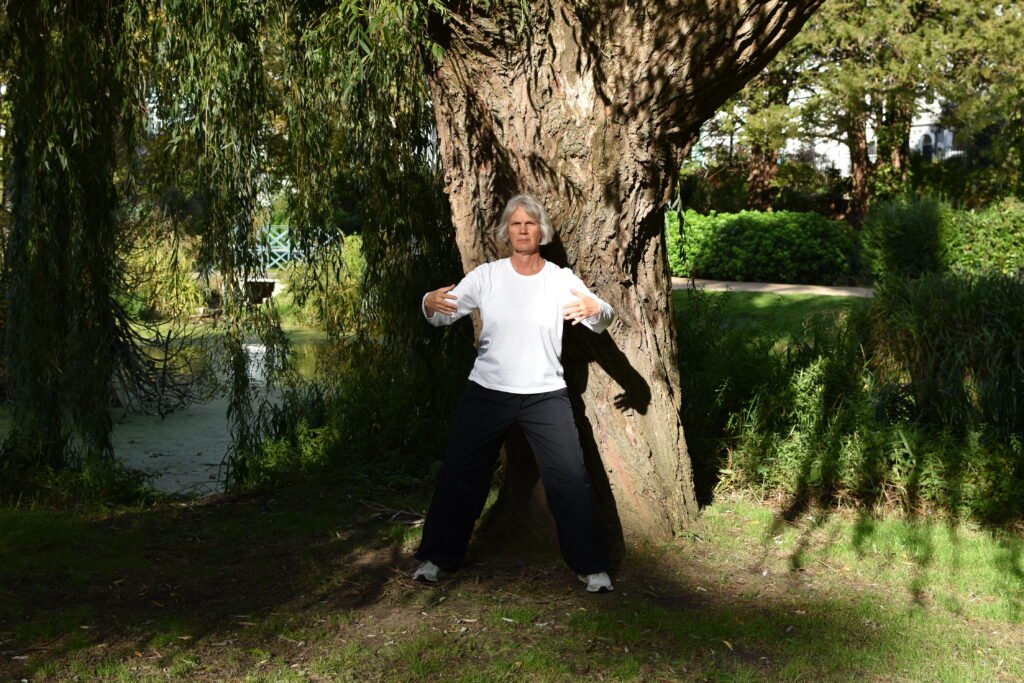
Zhan Zhuang
Doing a lot by doing nothing. Known as “standing like a tree”, this practice of stillness builds inner strength, improves posture and calms the mind – the foundation of the internal martial arts
Read more
Would you like to gain an abundance of energy by doing nothing?
By holding a posture in stillness, you develop internal strength, improve your posture and alignment, root your structure, calm your mind, loosen soft tissue, and build the skill of body awareness.
Zhan Zhuang, or “standing like a tree,” is the foundation of internal martial arts and a form of Qigong. Martial artists trained in it as a foundation, since power is generated from a stable root. Traditional Chinese Medicine Doctors practised it to cultivate Qi. Musicians training on certain instruments have relied on stillness and steady breath. Across all these disciplines, standing itself came first.
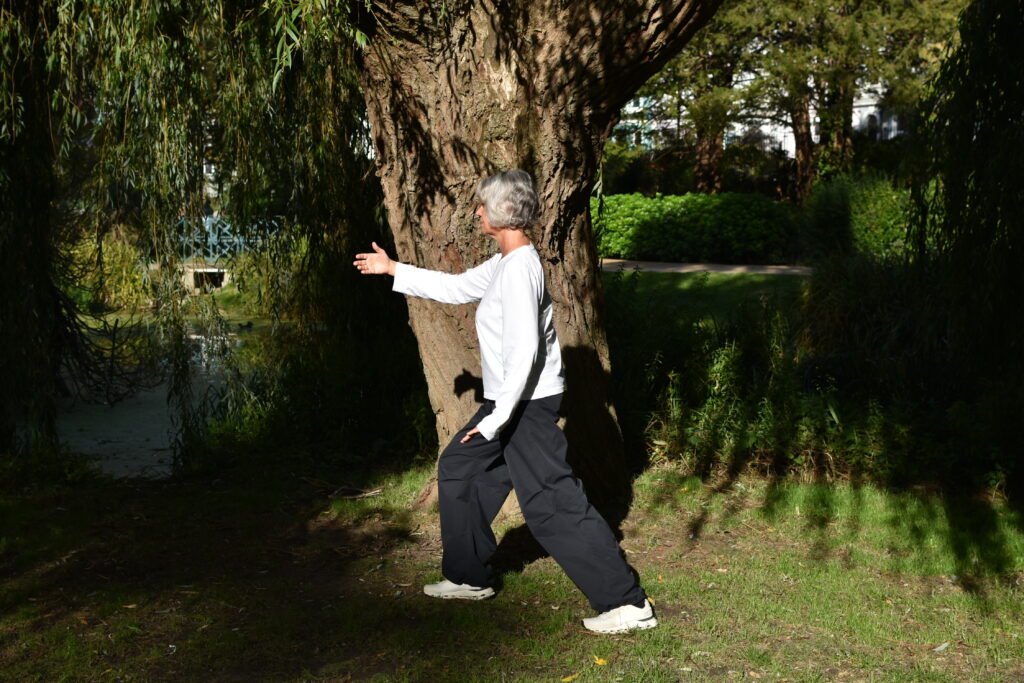
Tai Chi
Slow, flowing, circular movements rooted in the martial arts – sometimes
called Chinese “shadow boxing”. Its calm, unhurried pace builds balance and grace, and it can be practised well into your eighties and beyond.
Read more
Tai Chi Chuan is a sequenced set of movements rooted in offensive and defensive martial techniques — sometimes called Chinese “shadow boxing” for its recognizable punches and kicks. What sets it apart is the slow, deliberate pace of practice: circular, fluid, relaxed motion marked by grace, balance, and a visible sense of calm. Recent research links many of its health benefits directly to this slowness and attentiveness. It’s practiced well into old age (eighties, nineties, and beyond) and stands as one of China’s most recognizable cultural art forms, with deep roots in traditional Chinese philosophy and self-cultivation.
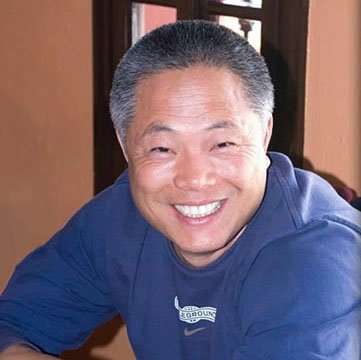
Meet My Teacher: Master Fumin Wang Guo
Many of you have asked where the movements we practise in class come from, so I’d love to introduce you to my own master and teacher, Master Fumin Wang Guo.
Master Fumin was born in Beijing in 1959. He studied Physical Education at Beijing Pedagogical University, specialising in Wushu, Taiji and Qigong, and also trained in Chinese massage (Tui Na) and acupressure at the Beijing School of Traditional Chinese Medicine.
He learned from some of China’s great masters of Yang and Chen style Taijiquan. He is the 25th generation lineage holder of Qingquan, a traditional martial art recognised as intangible cultural heritage in Beijing. In 2014 he was awarded the 8th Duan in Wushu, one of the highest grades there is.
For more than twenty years he has lived and taught in Spain, where he founded the Shen Zhou Association to share Taiji and Qigong culture. That is where I trained with him and became a certified Qigong teacher, and I still continue to practise and learn with him today. Much of what we practise together in class comes from his teaching.
The very first workshop I took with him was Qigong of the Giant Roc, a beautiful series that I still treasure.
I feel very grateful to keep learning from him, and every time we practise together, we’re part of his wonderful tradition.